
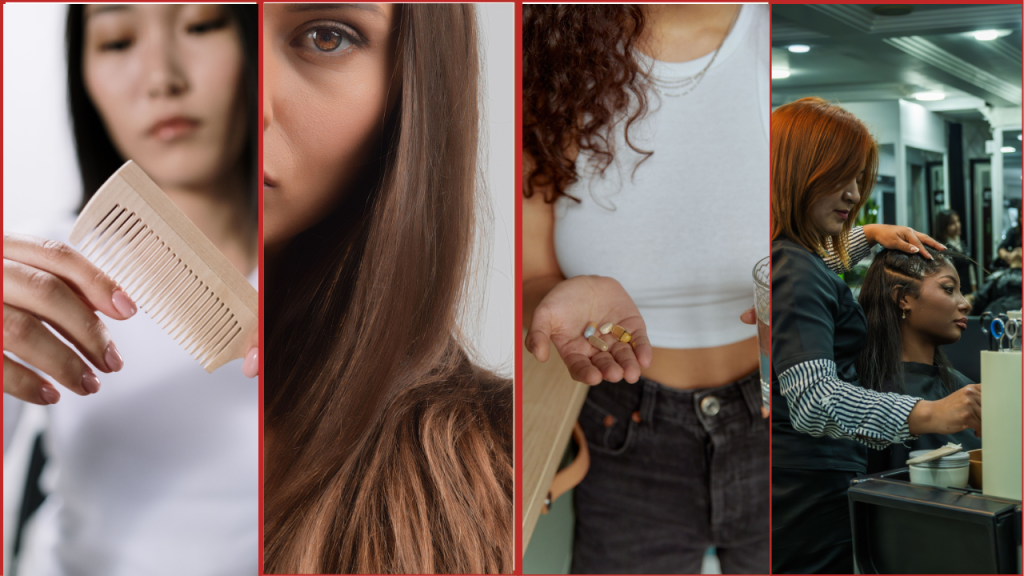
Finding a clump of hair in the shower drain is a specific kind of heartbreak.
You tell yourself it’s normal. Then you notice your part is wider than it used to be. Your ponytail feels thinner in your hand. And suddenly you’re up at midnight, scrolling for answers.
If that’s you right now, take a breath. You’re not imagining it, and you’re not alone. Hair loss affects far more women than people realize — it’s just rarely talked about the way male hair loss is.
The good news? There are real, proven solutions. Not miracle cures, not magic potions — but genuine, science-backed options that can slow shedding, support regrowth, and help you feel like yourself again.
This guide walks through exactly what works, what to skip, and how to build a routine that actually fits your life.
Disclaimer
Important: Sudden or patchy hair loss, scalp pain, redness, scaling, or hair loss accompanied by other symptoms such as fatigue or unexplained weight changes should be evaluated promptly by a healthcare professional.
Why Women Lose Hair (It’s Rarely Just One Thing)
Before jumping into solutions, it helps to understand what’s actually happening. Hair loss in women is almost never caused by a single factor — it’s usually a mix.
The most common causes include:
- Hormonal changes — pregnancy, postpartum shifts, perimenopause, menopause, or stopping birth control
- Female pattern hair loss (androgenetic alopecia) — a genetic thinning pattern, often starting at the part line
- Telogen effluvium — sudden shedding triggered by stress, illness, surgery, or a major life event
- Nutrient deficiencies — low iron, vitamin D, zinc, or protein intake
- Thyroid issues — both underactive and overactive thyroid can trigger shedding
- Tight hairstyles — years of tight ponytails, braids, or extensions can cause traction alopecia
- Harsh styling habits — heat damage, over-processing, and aggressive brushing
In my experience talking to women about this, the shock of hair loss often hits harder than the hair loss itself. It feels sudden even when it’s been building for months. That emotional weight is real, and it deserves acknowledgment — not just a list of products.
Scientific note: Hair loss is a symptom rather than a diagnosis. Common medical causes include androgenetic alopecia (female pattern hair loss), telogen effluvium, alopecia areata, thyroid disorders, nutritional deficiencies, medication side effects, and hormonal changes. Identifying the underlying cause is essential because treatments vary depending on the diagnosis.
Step One: See a Dermatologist Before Anything Else
This might not be the exciting answer, but it’s the honest one.
Before trying serums, supplements, or scalp treatments, get a proper diagnosis. A dermatologist (ideally one who specializes in hair loss) can run bloodwork, check your scalp, and identify what type of hair loss you’re actually dealing with.
Why this matters: treating hormonal thinning like it’s stress-related shedding — or vice versa — wastes months you don’t need to lose. The right diagnosis points you toward the right solution the first time.
A simple visit can rule out:
- Iron deficiency anemia
- Thyroid disorders
- Vitamin D deficiency
- Underlying autoimmune conditions like alopecia areata
The Solutions That Actually Have Evidence Behind Them
1. Minoxidil (Topical Treatment)
Minoxidil is currently the most well-researched over-the-counter treatment for female pattern hair loss. It’s applied directly to the scalp and works by extending the hair’s growth phase.
What to expect:
- Results typically take 4–6 months of consistent use
- Shedding sometimes increases briefly in the first few weeks (this is often a sign it’s working, as it pushes resting hairs out to make room for new growth)
- It needs to be used continuously — stopping usually means the benefits fade over time
I’ve seen this work best when women treat it like brushing their teeth: a non-negotiable daily habit, not a “when I remember” step.
Scientific note: Topical minoxidil is one of the most extensively studied treatments for female pattern hair loss and is approved in many countries for this condition. Clinical studies show that consistent use over several months can improve hair density in many users, although individual responses vary.
2. Low-Level Laser Therapy (LLLT)
These are laser caps, combs, or helmets that use red light to stimulate hair follicles. Research suggests it can improve hair density with consistent use over several months.
It’s not an overnight fix, but for women who want a non-drug option to pair with other treatments, it’s worth discussing with a dermatologist.
Scientific note: Low-level laser therapy has shown modest improvements in hair density in some clinical studies, particularly for androgenetic alopecia, although results differ between individuals and devices.
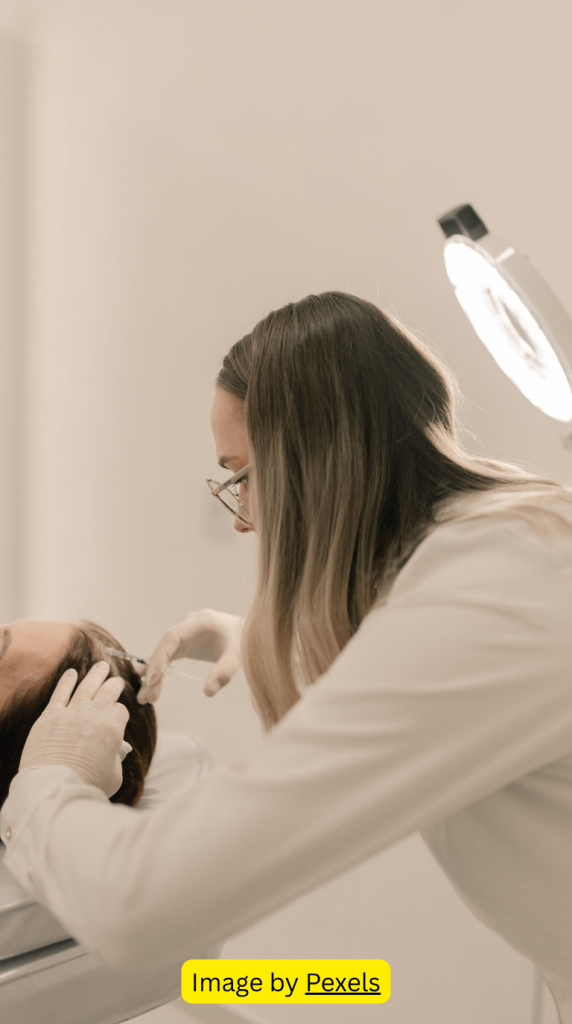
3. Platelet-Rich Plasma (PRP) Therapy
PRP involves drawing a small amount of your own blood, processing it to concentrate the platelets, and injecting it into the scalp. The idea is that growth factors in the plasma stimulate dormant follicles.
It’s more of an in-office investment, both financially and time-wise, but many dermatologists now offer it as a complement to minoxidil.
Scientific note: Research on platelet-rich plasma (PRP) is promising, but treatment protocols differ among clinics, and study results vary. Dermatologists generally consider it an adjunct treatment rather than a guaranteed solution.
4. Addressing the Root Cause Directly
If bloodwork shows low iron, low vitamin D, or a thyroid imbalance, treating that underlying issue is often the single most effective “hair loss solution” — because you’re solving the actual problem, not just managing a symptom.
Common corrections include:
- Iron supplementation (only under medical guidance — too much iron can be harmful)
- Vitamin D3 supplementation
- Thyroid medication adjustments
- Increasing protein intake, since hair is literally made of protein
5. A Gentler Styling Routine
This one is simple, but it’s often overlooked.
Small changes that protect existing hair:
- Loosen ponytails and braids — tight styles pull on the follicle over time
- Air-dry more often, or use a heat protectant every time you use hot tools
- Switch to a wide-tooth comb, especially on wet hair
- Sleep on a silk or satin pillowcase to reduce friction and breakage
- Space out chemical treatments like bleach or relaxers
I’ve tried the “silk pillowcase” switch myself out of curiosity more than desperation, and honestly, the difference in morning frizz and breakage around the hairline was noticeable within a few weeks. It’s a small change, but it adds up.
What About Supplements and “Hair Vitamins”?

This is where a lot of money gets wasted.
If you already have a nutrient deficiency, correcting it can genuinely help. But if your levels are already normal, taking more biotin, collagen, or “hair growth gummies” typically won’t do much beyond what a balanced diet already provides.
Before buying any supplement, ask yourself:
- Has a blood test actually confirmed I’m deficient in this?
- Is this brand backed by real research, or just testimonials?
- Am I expecting this to fix something a topical or medical treatment would handle better?
A little skepticism here saves both money and disappointment.
Scientific reviews generally find that supplements improve hair growth primarily when a nutritional deficiency exists. Taking high-dose supplements without medical need is unlikely to increase hair growth and may occasionally cause unwanted effects.
Building a Realistic At-Home Routine

Here’s a simple framework that combines the basics without overwhelming your routine:
Morning:
- Gentle, sulfate-free shampoo (2–3x per week, not necessarily daily)
- Lightweight scalp serum or minoxidil, if prescribed
- Loose style — avoid tight elastics
Evening:
- Scalp massage for 2–3 minutes (this may help boost blood flow to follicles)
- Silk pillowcase
- Leave-in treatment or oil on the ends only, avoiding the scalp if you’re prone to oiliness
Weekly:
- Deep conditioning treatment
- Check in on stress levels, sleep, and diet — these quietly affect shedding more than most people expect
How Long Until You See Results?
This is the question everyone asks, and the honest answer is: longer than you want.
Hair grows in cycles, and it can take 3 to 6 months before you notice a real difference, and up to a year for full results with treatments like minoxidil or PRP.
In my experience, the women who stick with a routine long enough to see results are the ones who stop checking the mirror every single day and instead take a photo once a month. It’s a small mindset shift, but it prevents the discouragement that makes people quit right before things start improving.
Hair naturally cycles through growth (anagen), transition (catagen), and resting (telogen) phases. Because only a small percentage of hairs grow at exactly the same time, noticeable improvements usually require several months.
When to Worry (and When Not To)
Losing 50–100 hairs a day is completely normal. It’s part of your hair’s natural growth cycle.
Signs worth getting checked out:
- Sudden, dramatic shedding over a few weeks
- Visible bald patches
- A widening part that keeps getting wider
- Hair loss paired with fatigue, weight changes, or irregular periods
Signs that are usually not a big concern:
- Seasonal shedding (many women notice more hair loss in fall)
- Temporary shedding 2–3 months after a stressful event, illness, or giving birth (this is textbook telogen effluvium and it typically resolves on its own)
Early shedding may occur because minoxidil can shift resting hairs into a new growth cycle. This temporary increase in shedding usually resolves as new hairs begin growing.
Frequently Asked Questions
Can hair loss in women be reversed? It depends on the cause. Hormonal and stress-related shedding often improves significantly with the right treatment. Genetic pattern hair loss usually can’t be fully reversed, but it can be slowed and, in many cases, partially regrown with consistent treatment.
Is it normal for hair loss to run in families? Yes. Female pattern hair loss has a genetic component, so if your mother or grandmother experienced thinning, you may be more likely to as well.
Do hair growth oils actually work? Some oils, like those containing rosemary extract, have preliminary research suggesting they may support hair thickness. They’re not a replacement for medical treatment, but they can be a reasonable addition to a routine.
Should I stop coloring my hair if it’s thinning? Not necessarily. Coloring itself doesn’t typically cause hair loss, but bleaching and over-processing can weaken strands and lead to breakage, which can look like thinning. Spacing out treatments and using bond-repair products can help.
The Real Takeaway
Hair loss can feel like it’s happening to you out of nowhere, but it almost always has a reason behind it — and reasons can be addressed.
Start with a proper diagnosis. Build a gentle, consistent routine. Give any treatment enough time to actually work before judging it. And be patient with yourself in the meantime; hair is deeply tied to how we feel about ourselves, and that’s a completely valid thing to grieve while you work on solutions.
You don’t need to fix everything overnight. You just need to start.
Save this article for later, and check back for updates as new treatments and research become available.