
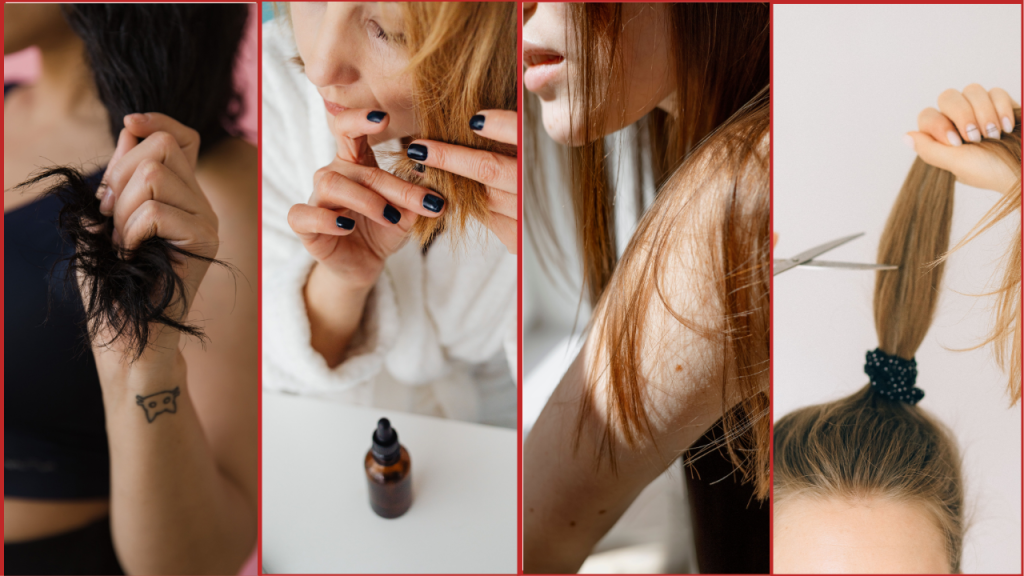
You finally got your hair to the length you wanted.
And then you noticed it. That dry, frizzy, straw-like tip that wasn’t there a few months ago.
Split ends have a way of showing up right when you’re not looking. One day your hair feels smooth. The next, it’s catching on your sweater, tangling more than usual, and looking a little… tired.
Here’s the problem most people run into: they Google “how to get rid of split ends,” and every single result says the same thing. Just cut it off.
But what if you’ve spent a year growing your hair out? What if you’re not ready to lose two inches over a few damaged tips?
In my experience, split ends aren’t always a “cut it immediately” emergency. Sometimes they’re a sign your hair needs a different kind of care — not a haircut.
This guide walks you through what’s actually causing your split ends, how to check how bad they really are, and what you can do to manage them without sacrificing your length. And yes, we’ll also talk about when a trim really is the smarter move — because sometimes it is.
Let’s start from the beginning.
Hair strands are made of dead keratinized cells, so once a split end forms, it cannot biologically heal itself. Oils, silicones, and conditioning ingredients temporarily smooth and coat the damaged area, improving appearance and reducing friction, but they do not permanently fuse the hair shaft.
What Causes Split Ends in the First Place

Split ends aren’t random. Your hair doesn’t just decide to break one day for no reason.
They happen because the protective outer layer of your hair — called the cuticle — has worn down. Once that layer is gone, the inner strand is exposed, dry, and fragile. Eventually, it splits.
A few things speed this up more than people realize:
- Heat styling without protection. Straighteners and curling irons feel harmless in the moment, but repeated heat slowly breaks down the hair’s structure.
- Over-brushing, especially when hair is wet. Wet hair stretches more easily and snaps more easily too.
- Rough towel-drying. That fast, aggressive rub-dry after a shower does more damage than most people expect.
- Sun and wind exposure. Ends are the oldest, most exposed part of your hair, so they take the most environmental hits.
- Chemical treatments. Coloring, bleaching, and relaxers weaken the cuticle layer over time.
I’ve noticed that most people don’t develop split ends from one big mistake. It’s usually a slow buildup of small habits — the same blow-dryer routine, the same tight ponytail, the same brush — repeated for months without much thought.
Once you know what’s actually causing the damage, it becomes a lot easier to slow it down.
If your hair becomes extremely brittle, breaks close to the scalp, or develops sudden patchy hair loss, it’s best to consult a dermatologist or healthcare professional, as these symptoms may indicate an underlying medical condition rather than routine split-end damage.
How to Tell If You Actually Have Split Ends
Before jumping into fixes, it helps to know what you’re actually dealing with.
Here’s a simple test you can do right now: twist a small section of hair from the ends. If you see little frizzy strands sticking out sideways, or the tip visibly forks into two, that’s a split end.
A few signs you’re dealing with more than just “a few strands”:
- Your hair tangles more than it used to, especially toward the bottom
- Your ends look thinner or wispier than the rest of the strand
- Your hair feels rough or dry specifically at the tips, even after conditioning
- You’re noticing more frizz that won’t smooth down no matter what product you use
I’ve tried the “twist test” on clients and on my own hair more times than I can count, and it’s honestly the fastest way to get a real answer. No guessing, no squinting in bad bathroom lighting — just twist a section and look.
If you’re only seeing a handful of splits scattered here and there, that’s manageable. If almost every strand you check shows damage, that’s your hair telling you it needs a bigger intervention, not just a new serum.
How to Get Rid of Split Ends Without Cutting Too Much

Let’s be honest about something first: you cannot permanently repair a split end. Once the protective cuticle separates, the split can continue traveling upward if left unmanaged, leading to increased breakage and the need for a larger trim later. Once the strand has split, that part of the hair is structurally damaged for good.
But here’s what most articles don’t tell you — you can seal, smooth, and manage split ends well enough that they stop getting worse, stop catching on things, and stop being visible. That buys you real time before you need a haircut.
This is how to get rid of split ends without cutting too much:
1. Use a hair oil to seal the cuticle temporarily.
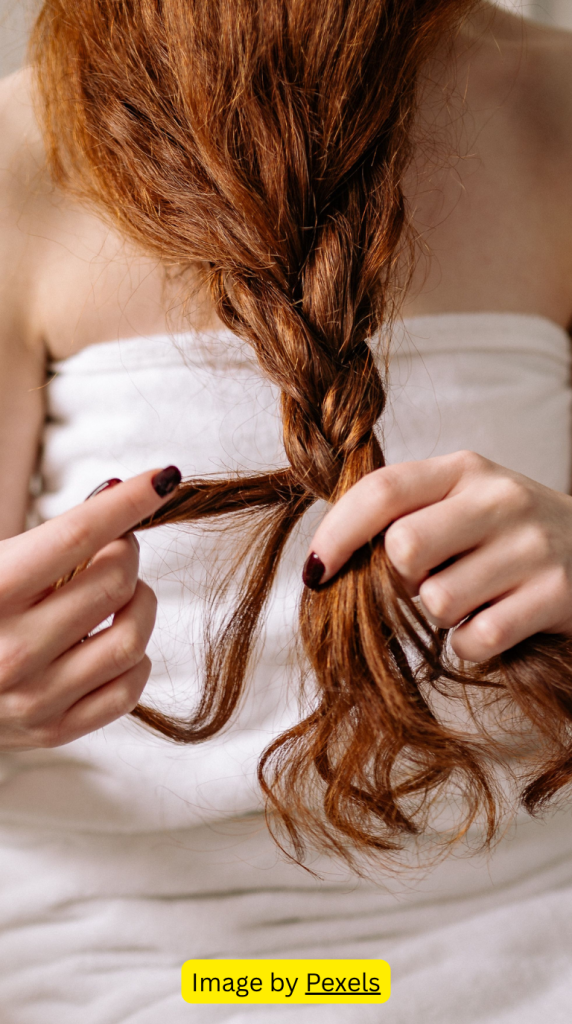
A few drops of argan oil or a similar lightweight oil, warmed between your palms and smoothed over dry ends, temporarily “glues” the split strand back together. It won’t last forever, but it makes the damage far less visible and prevents the split from traveling further up the strand.
2. Try a “micro trim” instead of a full cut.
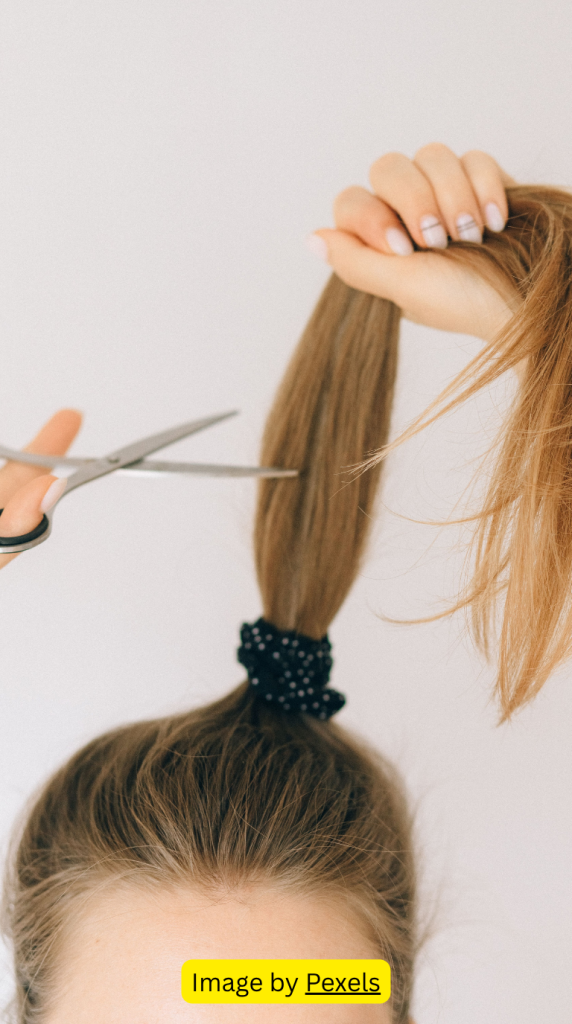
If you really don’t want to lose length, ask your stylist specifically for a dusting — trimming just a quarter-inch off, focused only on the visibly damaged tips. In my experience, this is the compromise most people don’t know to ask for. You keep almost all your length while still removing the worst of the damage.
3. Deep condition weekly, focused on the ends.
Split ends are dry ends. A weekly deep-conditioning mask, applied mid-shaft to ends (not the roots), rehydrates the hair and slows further splitting.
4. Switch to a wide-tooth comb for detangling.
Brushes with tight bristles pull and stress already-weak ends. A wide-tooth comb, used gently from the bottom up, reduces the breakage that turns small splits into bigger ones.
5. Sleep on a silk or satin pillowcase.
Cotton pillowcases create friction overnight, which roughs up your ends while you sleep. Silk or satin lets hair glide instead of catching.
I’ve seen this work well for people who are actively growing their hair out and just need to buy a few extra months before their next real trim. It’s not a permanent fix — nothing is — but it’s a genuinely effective way to manage split ends while protecting your length.
Products and Ingredients That Actually Help Split Ends

Not every product marketed for split ends actually does much. Here’s what’s genuinely worth using, and why.
- Leave-in conditioners with keratin. Keratin is the protein your hair is made of. Leave-in formulas with hydrolyzed keratin temporarily fill in gaps in the damaged cuticle.
- Silicone-based smoothing serums. Ingredients like dimethicone coat the hair shaft and smooth down the frizzy, split fibers so they lie flatter and look healthier.
- Argan oil or marula oil. Both are lightweight enough not to weigh hair down, while still sealing moisture into dry ends.
- Bond-building treatments. Products designed to rebuild internal hair bonds (often labeled “bond repair”) won’t undo a split, but they do strengthen the surrounding hair so it’s less likely to split further.
- Sulfate-free shampoo. Sulfates strip natural oils fast, which leaves ends drier than they need to be. A gentler, sulfate-free formula helps ends hold onto moisture longer.
In my experience caring for damaged hair, I’ve found that “miracle” split-end products over the years, and the honest truth is: the ones that work aren’t complicated. They hydrate, they smooth, and they protect. If a product promises to “permanently repair” split ends, that’s a claim worth being skeptical of — no topical product can re-fuse a strand that has already split.
Hydrolyzed keratin proteins can temporarily adhere to damaged areas of the hair cuticle, improving strength and smoothness until the next few washes.
Daily Habits That Prevent Split Ends From Coming Back

Fixing your current split ends only solves half the problem. The other half is making sure new ones don’t show up as fast.
A few small daily changes make a bigger difference than people expect:
- Always use heat protectant before styling. Even on lower heat settings, this one habit alone prevents a huge amount of cumulative damage.
- Lower your styling tool’s temperature. You don’t need max heat for most hair types. A slightly lower setting, used consistently, is much gentler over time.
- Let hair air-dry partway before blow-drying. Going in with heat while hair is dripping wet stresses the strand more than starting from damp.
- Loosen your hairstyles. Tight ponytails and buns pull at the hair shaft daily. Looser styles reduce that constant tension.
- Trim your routine, not just your hair. Swapping one rough habit — like aggressive towel-drying — for a gentler version (like a microfiber towel or an old cotton t-shirt) adds up over weeks and months.
I’ve noticed that people who stick to even two or three of these habits consistently see noticeably fewer split ends within a couple of months. It’s rarely about doing everything perfectly. It’s about removing the one or two habits doing the most damage.
Preventing breakage helps preserve the length you already have, but it does not increase the rate at which hair grows from the scalp. Hair growth primarily depends on genetics, hormones, nutrition, and overall health.
When You Should Actually Get a Trim
All of this said, there’s a point where sealing and smoothing isn’t enough anymore, and a trim really is the right call.
Here’s when I’d genuinely recommend it:
- Your split ends have traveled noticeably up the strand, not just at the very tip
- You’re seeing splits on nearly every section, not just scattered ones
- Your ends feel rough no matter how much you condition or oil them
- Your hair is tangling constantly, even right after washing
If you’re in this position, ask for a dusting or micro trim rather than a standard cut. Be specific with your stylist: “I want to keep as much length as possible — please only remove the damaged ends.” Most stylists can work with a quarter-inch trim if that’s what you’re asking for.
A trim at the right time isn’t a failure. It’s what actually lets your hair keep growing in a healthy direction, instead of carrying damage further up the strand month after month.
Curly, coily, chemically treated, and high-porosity hair often develops split ends more easily because the protective cuticle tends to experience greater dryness and mechanical stress.
Myth: A product can permanently repair split ends.
Fact: No topical product can permanently rejoin a split hair strand. Treatments improve appearance and reduce further damage, but trimming remains the only way to completely remove existing split ends.
Final Thoughts
Split ends aren’t a sign you’re doing everything wrong. They’re just a normal part of having hair that’s been styled, colored, or exposed to daily life.
The good news: you have more control over them than most people realize. Between sealing oils, gentler daily habits, and the occasional micro trim, you can manage split ends without giving up the length you’ve worked for.
Save this guide for the next time you spot a split end and aren’t ready to cut. Your hair — and your length goals — will thank you.